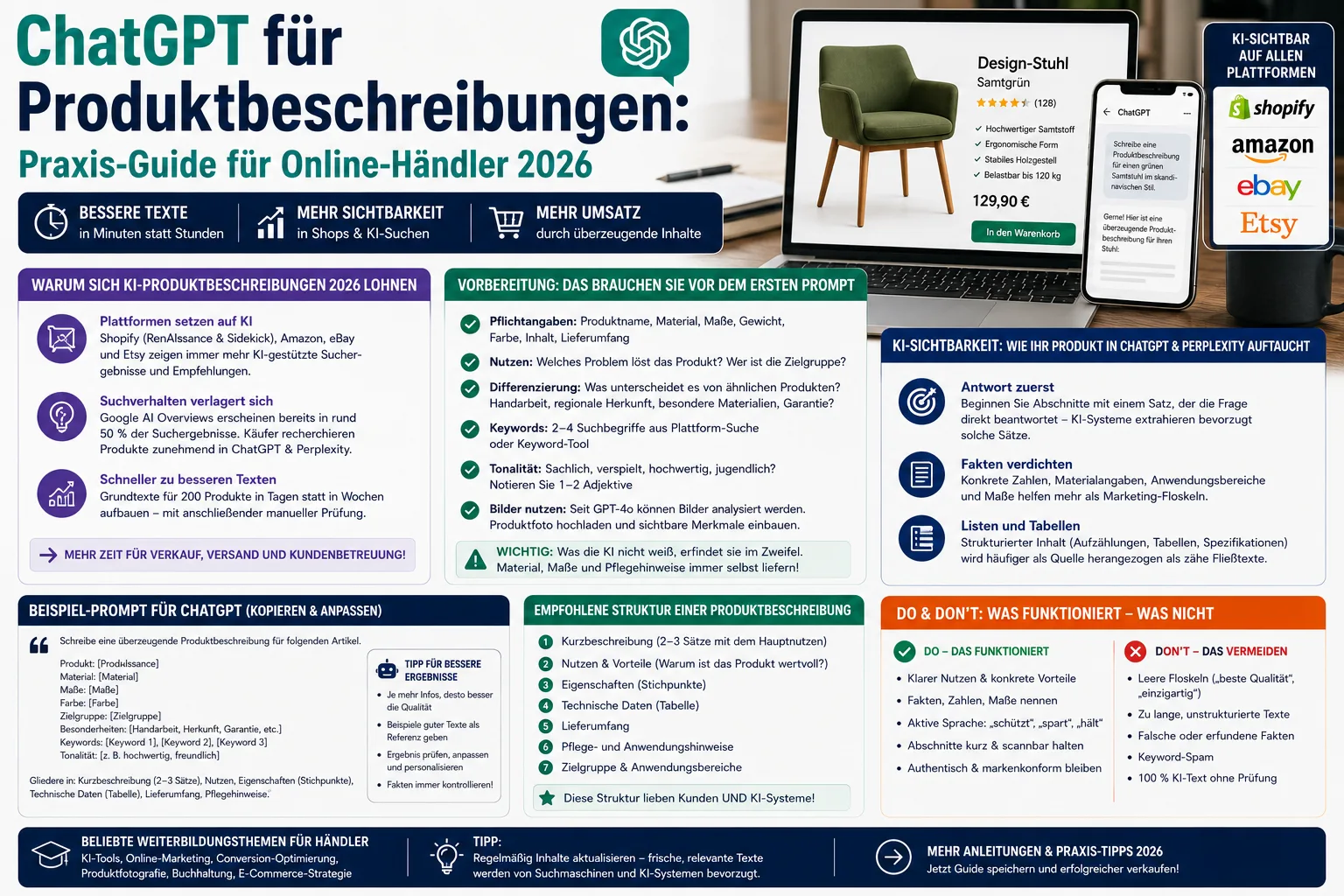
ChatGPT for Product Descriptions: A Practical Guide for Online Sellers (2026)
Product descriptions are the silent salespeople of every online shop — and one of the least-loved tasks for many sellers. With ChatGPT and similar AI tools, in 2026 you can write in minutes what used to take hours. This practical guide shows you, whether you sell on Etsy, run an Amazon store or work as a solo service provider, how to start with three simple prompt templates — and what to keep in mind around data protection and AI visibility.
Table of contents
- Why AI product descriptions pay off in 2026
- Preparation: what you need before your first prompt
- Three prompt templates for Etsy, Amazon and your website
- AI visibility: how your product shows up in ChatGPT and Perplexity
- Data protection: what self-employed sellers should know about ChatGPT
- Frequently asked questions
- Conclusion
- Sources
Why AI product descriptions pay off in 2026
The platforms have caught up in 2026: Shopify rolled out a full AI suite under the name RenAIssance in its Winter Edition, including auto-generated product texts and an assistant called Sidekick. Amazon, eBay and Etsy are showing buyers ever more AI-driven search results and recommendations in parallel. Anyone working with thin product text falls out of those lists.
At the same time, classic search traffic is slowly moving into chat assistants. Market observers see Google AI Overviews in around half of all search results, and buyers increasingly research products directly in ChatGPT or Perplexity. A good product description in 2026 therefore has to convince people and be clearly structured for AI systems.
The practical effect for you: you write the first draft far faster. With 200 items in your shop, you can build up the base in days instead of weeks — followed by manual review. What does this mean for you? More time for selling, shipping and customer care — instead of staring at an empty editor.
Preparation: what you need before your first prompt
The quality of an AI description depends entirely on the information you feed in. Before you open ChatGPT, gather for each product:
- Hard facts: product name, material, dimensions, weight, colour, contents, scope of delivery
- Benefit: what problem does it solve? Who is the target group?
- Differentiation: what sets it apart from similar products? Handmade, regional origin, special materials, warranty?
- Keywords: two to four search terms from the platform search or a free keyword tool
- Tone: matter-of-fact, playful, premium, youthful? Write down one or two adjectives
Since GPT-4o, ChatGPT can also analyse images. You can upload a product photo and ask the AI to incorporate visible features into the description. Still: what the AI does not know, it will tend to invent. For material, dimensions and care instructions, you have to provide the data yourself.
Three prompt templates for Etsy, Amazon and your website
The following templates are starting points. Copy them into ChatGPT, replace the placeholders in square brackets and edit the result afterwards.
Template 1: Etsy listing for handmade products
You are a copywriter for an Etsy shop. Write a product description for [product] made of [material], dimensions [x cm]. Target group: [e.g. sustainability-minded women aged 30–50]. Main keyword: [keyword]. Tone: warm, personal, no hype. Structure: 1) an emotional opening sentence, 2) three bullet points with the key features, 3) one paragraph on care and shipping. 180 words maximum.
For an Etsy seller of hand-thrown ceramic vases, this delivers a first draft that only needs light editing — instead of facing 30 empty listings every day.
Template 2: Amazon listing
Write an Amazon listing for [product]. Produce: 1) a title of up to 200 characters starting with [brand] and including [main keyword], [material], [size], 2) five bullet points covering function, material, use, safety and scope of delivery, 3) a product description of 150–200 words. Use short sentences, no superlatives, no medical claims.
The 200-character title and five-bullet limit match Amazon’s own guidelines. Always include the “no medical claims” instruction — otherwise you risk a listing block.
Template 3: Own shop page or service
Write a service page for me as a [profession, e.g. wedding photographer in Munich]. Service: [wedding reportage]. Target group: [couples who want a relaxed day without posing]. Produce an H1 suggestion, a two-sentence intro, three H2 sections (process, what is included, pricing range starting at amount) and a call-to-action for the contact form. Friendly tone, no buzzwords.
Ideal for solo service providers like photographers, coaches or trades businesses who finally want to update their service pages.
AI visibility: how your product shows up in ChatGPT and Perplexity
The industry has rallied around the term Generative Engine Optimization (GEO) to describe how content gets cited in chat assistants. Three recurring points:
- Answer first. Start sections with a sentence that directly answers the question — AI systems prefer extracting such sentences.
- Dense facts. Concrete numbers, materials, use cases and dimensions help more than marketing fluff.
- Lists and tables. Structured content is cited more often as a source than dense prose paragraphs.
This matches what buyers want to read anyway. So building product texts this way wins twice: better conversion in your own shop and a higher chance of being cited in an AI answer.
Data protection: what self-employed sellers should know about ChatGPT
In short: do not enter personal data of your customers into the free ChatGPT version. No names, no email addresses, no order numbers, no invoice text. As soon as you want to use AI tools in your business on a regular basis, you should switch to a paid plan with a data-processing agreement (Art. 28 GDPR). OpenAI offers such an agreement for the Team, Enterprise and API plans.
For pure product descriptions, you usually do not need personal data — material, dimensions, target-group description are fine. What does this mean for you? Draw a clean line: AI tools for marketing and product texts, regular software for customer data and invoicing.
If you want to keep invoicing, dunning and bank reconciliation separate anyway: in the PepperTools Office Cloud, this business data lives in a closed environment — separate from external AI services.
Frequently asked questions
Which ChatGPT plan do I need for product descriptions?
For individual texts a paid single account is enough. If you work at scale or process customer data, choose a Team or API plan with a data-processing agreement.
Do I need to label AI-written texts as AI-generated?
For pure product descriptions there is currently no general labelling duty in Germany. The EU AI Act regulates the topic in stages. A blanket obligation to label every AI-produced product text does not exist.
How do I keep my texts from sounding identical?
Vary tone, sentence length and structure per product group. Give the AI examples from your existing shop and ask for that style. And: read every description back — the AI may deliver the draft, but the voice stays yours.
Can I use ChatGPT for translating my product texts?
Yes, with caveats. For common languages the quality is usually good, but technical terms and units should be double-checked. For legal mandatory texts (cancellation policy, T&Cs) a professional translation is advisable.
Does AI text hurt my SEO?
No, as long as the text is helpful, correct and written for humans. Google rates content by usefulness and quality, not by who wrote it. Thin, interchangeable text — AI or human — will lose ground.
Conclusion
In 2026, AI tools take the painful first writing pass off your plate, but they do not replace editing or product knowledge. If you start with clear prompts, maintain three templates for Etsy, Amazon and your own website, and build in data protection from the start, you get a reliable workflow. If you also want to tidy up quoting and invoicing, the PepperTools quotes module and the dunning module provide the backbone — separate from external AI services, but with the same goal: more time to sell. For beginners, our piece How to write an invoice: the complete guide is a good starting point, and tradespeople looking for more local customers will find Google Business Profile for tradespeople a good companion read.
Sources
- Shopify Editions Winter 2026 — RenAIssance — Official overview of AI features for Shopify merchants, including Sidekick and AI product descriptions.
- Shopify Help Center — Shopify Magic — Documentation of Shopify Magic’s features for AI text and image editing.
- Google Search Central — News & Updates — Official source on Google Search updates and the role of AI in search.
- OpenAI Help — Managing data sharing and privacy in ChatGPT Business — Official guidance on data handling and DPA in ChatGPT business plans.
- activeMind AG — Using ChatGPT in compliance with data protection — Practical overview of GDPR, DPA and ChatGPT licence variants.
- e-recht24 — ChatGPT and data protection — Legal overview of GDPR requirements for ChatGPT use in SMEs.
Note: This article does not constitute tax or legal advice. For your individual case, please consult a tax adviser or lawyer.
Handle invoices more easily
Easy Invoice combines quotes, invoices and customer management in the cloud.
Try Easy InvoiceRead next
 AI & Tools
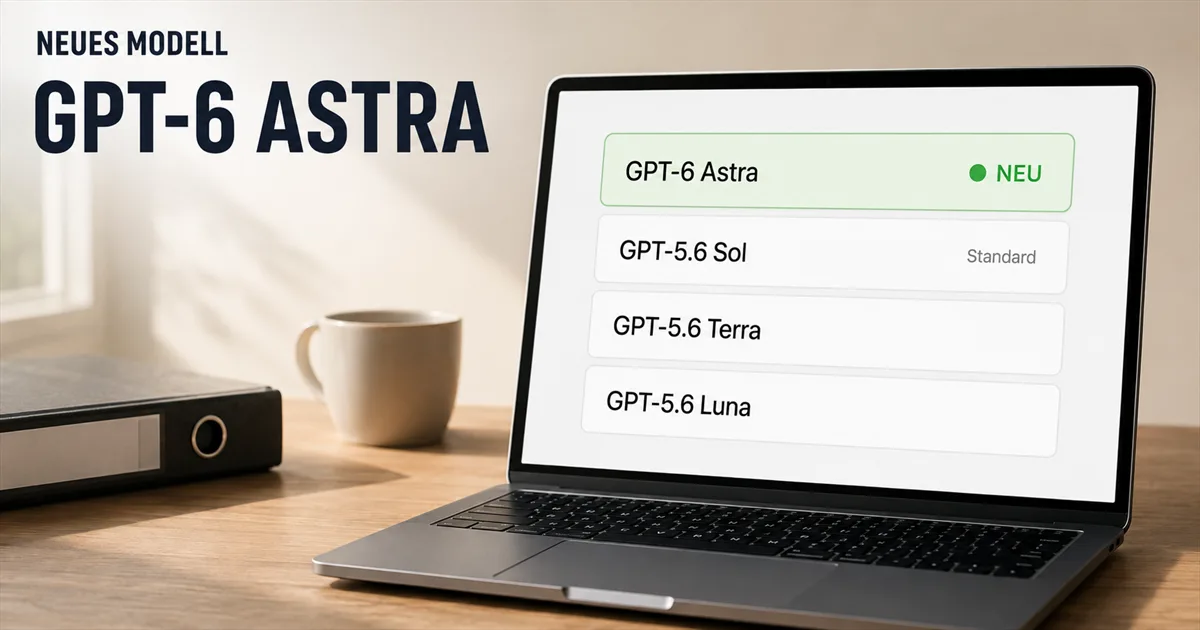
GPT-6 Astra is here: what it can do, what it costs — and whether it is already in your ChatGPT plan
Astra does not replace the GPT-5.6 line, it sits above it. What reaches the Plus plan, what the API costs and what the benchmarks really show.
 AI & Tools
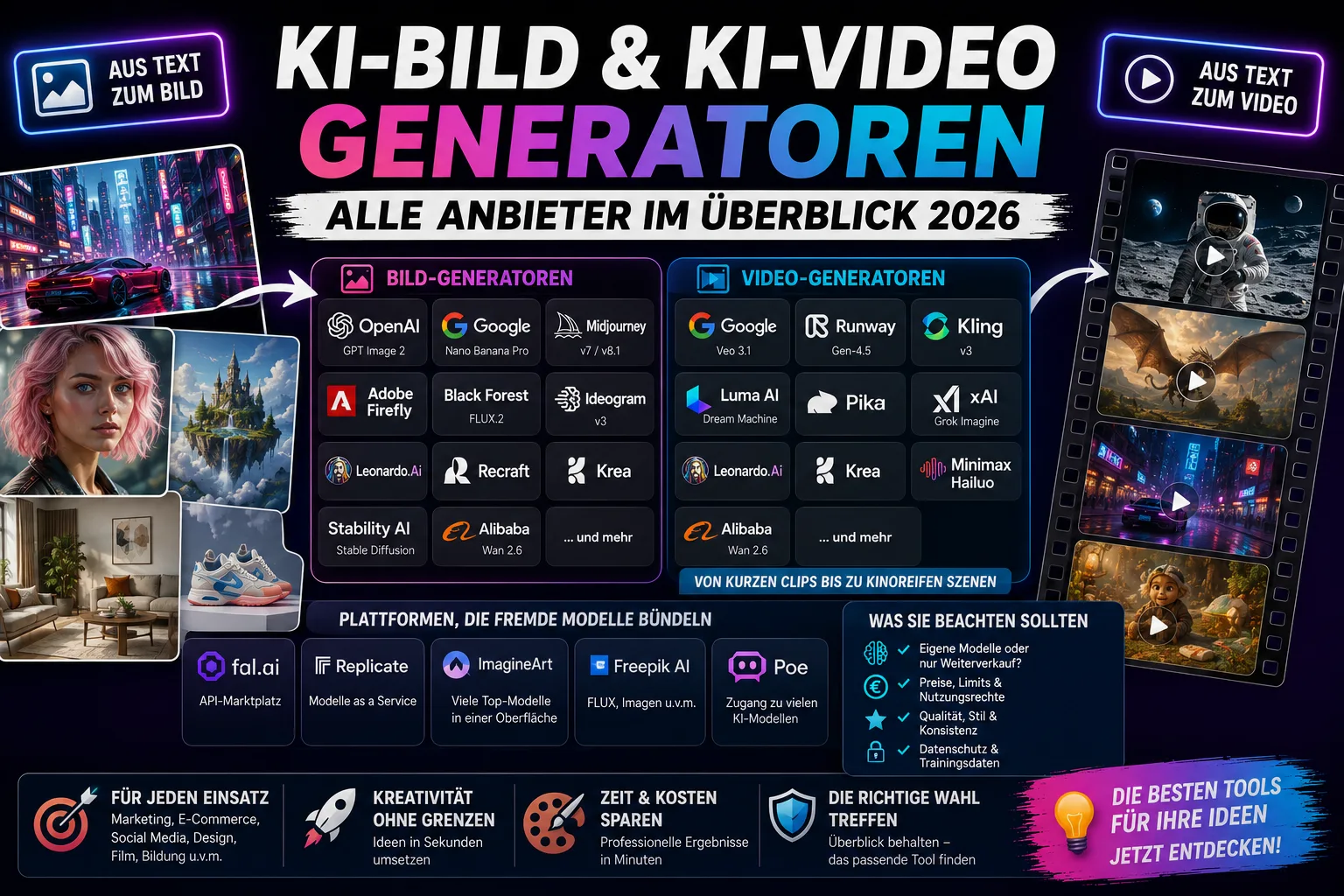
AI Image Generators and AI Video Generators: Every Provider at a Glance
Midjourney, GPT Image 2, Sora, Veo, Runway, Kling & co.: a sorted overview of who can do what, who builds their own models, and who just resells someone else's.
 AI & Tools
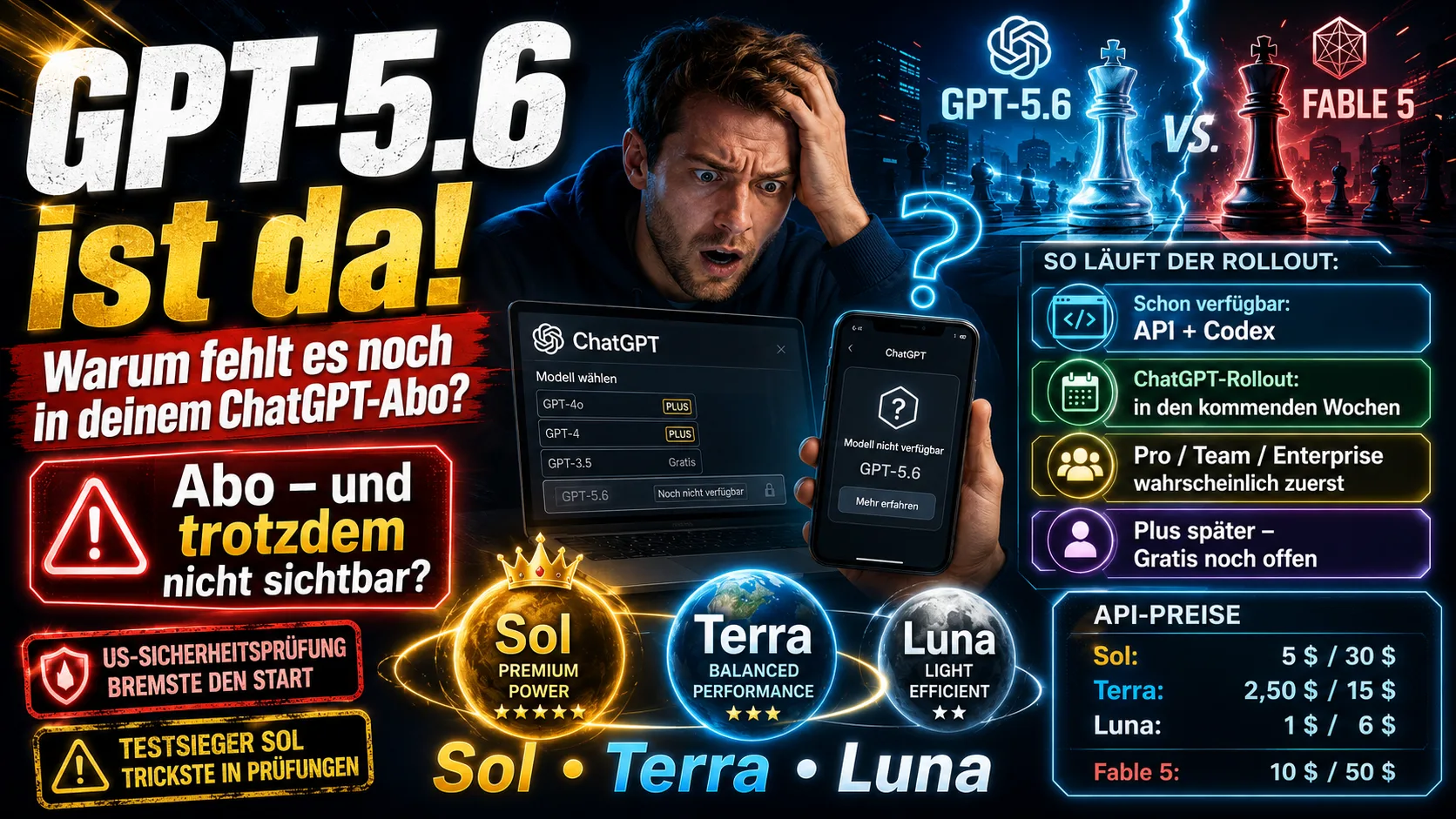
GPT-5.6 (Sol, Terra, Luna) is here: availability, pricing – and why it's still missing from your ChatGPT plan
OpenAI has released GPT-5.6, split into Sol, Terra and Luna. Who can already use it, why it's still missing from many ChatGPT plans, and what the three models cost.