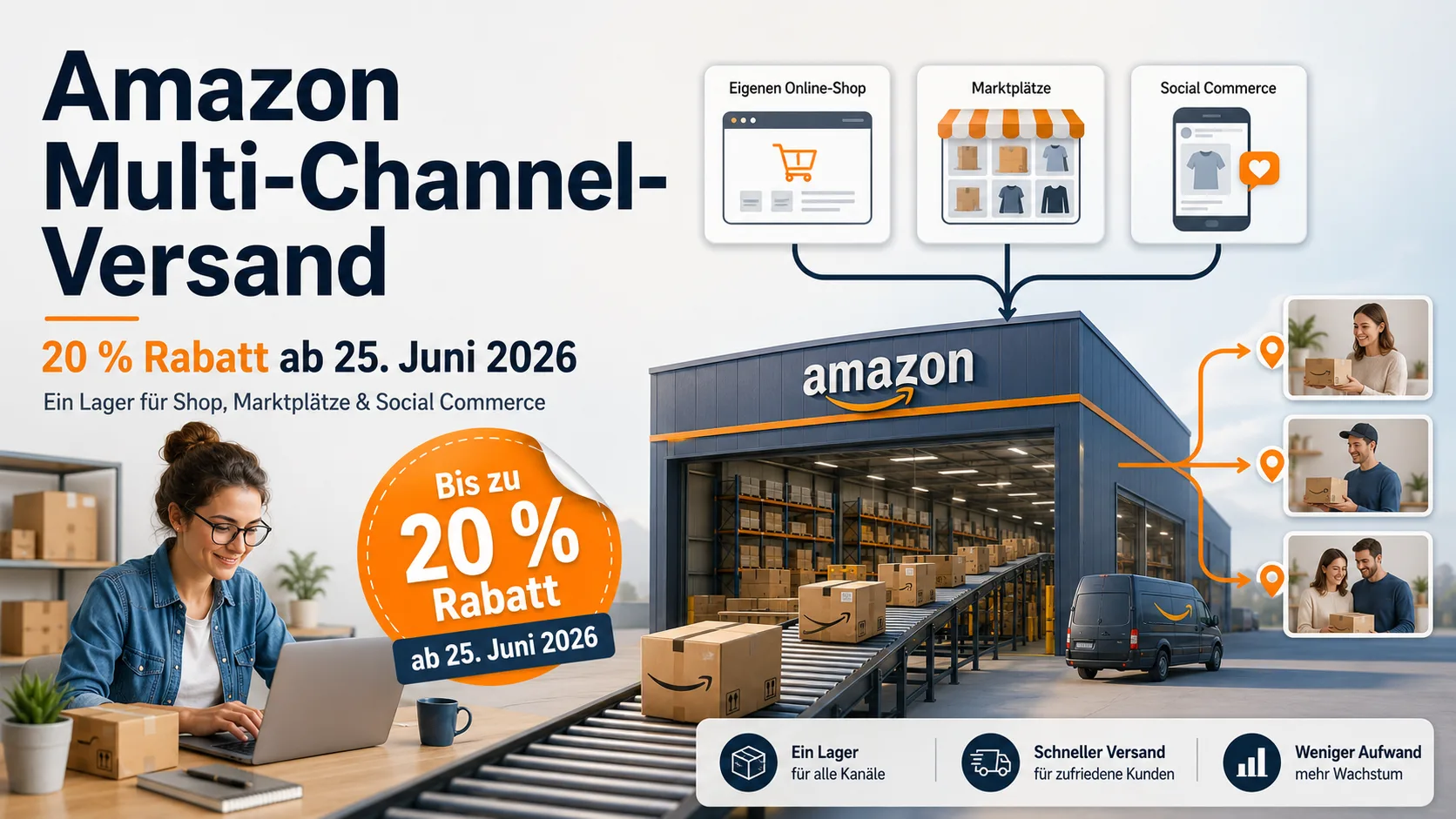
Amazon Multi-Channel Fulfillment: 20% Off from 25 June 2026
From 25 June 2026, Amazon is giving up to 20% off the shipping fees for Multi-Channel Fulfillment (MCF). This lets you ship orders from your own shop, eBay or Etsy out of a single warehouse. Here is what the programme offers – and who it really pays off for.
Table of contents
- What changes from 25 June 2026
- What Multi-Channel Fulfillment is
- Who benefits from MCF
- How to set up Multi-Channel Fulfillment
- Costs and limits to know
- Frequently asked questions
- Conclusion
- Sources
What changes from 25 June 2026
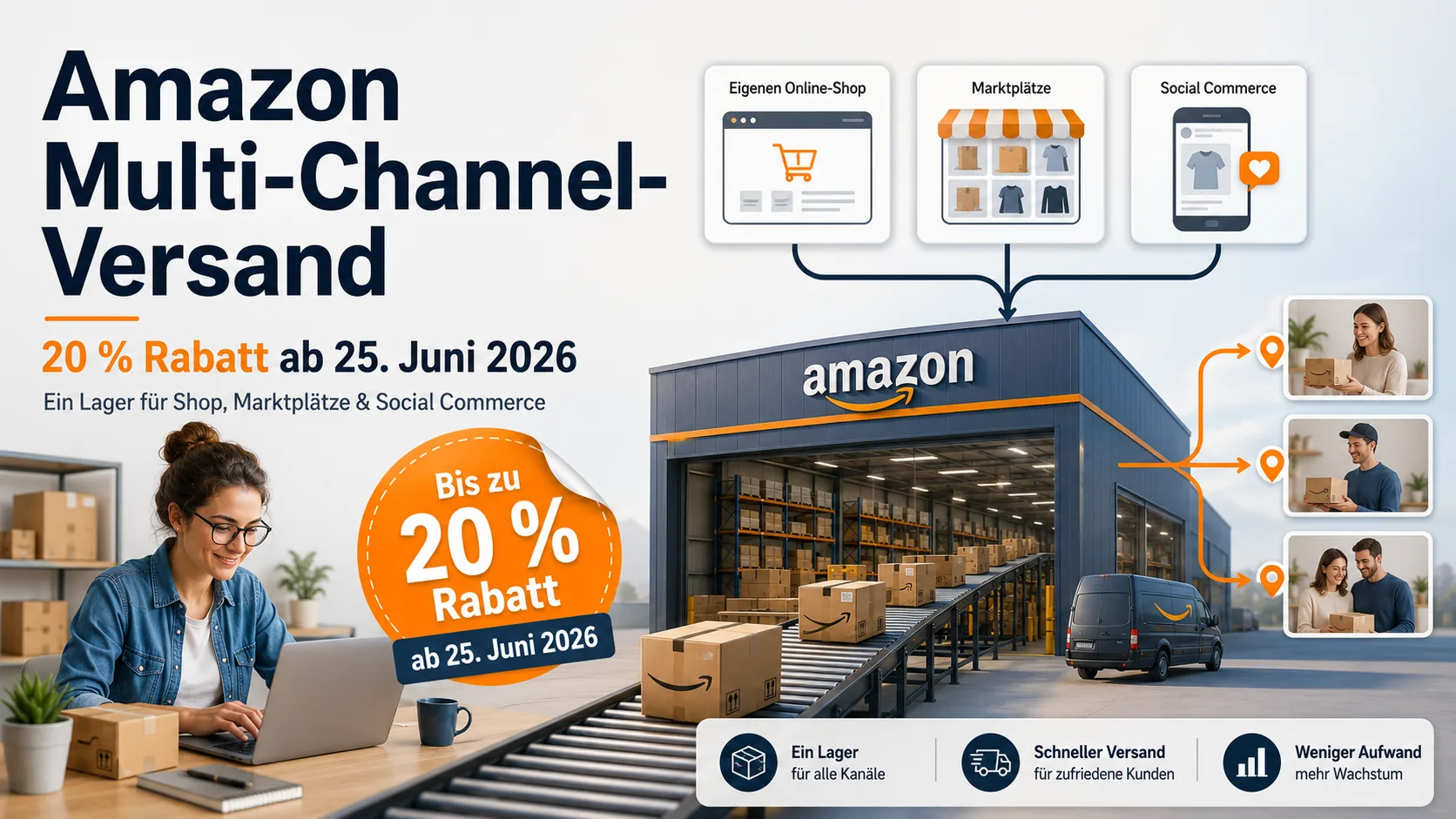
On 25 June 2026, Amazon is launching two discount programmes for Multi-Channel Fulfillment (MCF). If you meet the requirements, you get up to 20% off your MCF shipping fees, according to Amazon.
The first programme is aimed at new sellers: professional selling partners in Germany, France, Italy or Spain who register for Fulfillment by Amazon (FBA) for the first time between 25 June 2026 and 24 June 2027 receive a 20% discount on shipping fees for the first 100 MCF units shipped within twelve months.
The second programme applies to existing, qualified sellers: here Amazon states that up to 20% off shipping fees is possible for the first 5,000 units shipped within six months. Sellers who meet the conditions should be notified by Amazon by email before 25 June 2026.
What does this mean for you? If you have been thinking about outsourcing your logistics anyway, the launch of this programme is a good moment to run the numbers – instead of putting it off again.
If you would rather ship your non-Amazon orders yourself, compare the carriers first: costs, real delivery times and customer ratings of DHL, DPD, GLS, Hermes and UPS are in Shipping providers compared.
What Multi-Channel Fulfillment is
With Multi-Channel Fulfillment you store your goods in an Amazon fulfilment centre. When a customer then buys something in your own online shop, on eBay, Etsy, via social media or another marketplace, Amazon picks, packs and ships the parcel directly to the customer – not just orders that come in through Amazon.de.
The key benefit: one stock pool serves every channel. You don’t have to store your products twice – once for Amazon and once for your own shop. It is also handy that, within Germany, parcels are shipped in neutral packaging without an Amazon logo. So your customers don’t immediately see that Amazon is behind the delivery.
Good to know: you don’t have to sell on Amazon to use MCF. The service works with or without active selling on the Amazon marketplace. For shipping within Germany, Amazon offers two speeds according to its own page: express (1 day) and standard (3 to 5 business days).
Who benefits from MCF
Take Lena, who makes hand-poured candles in her small workshop. She sells on Etsy, has her own Shopify shop and also lists individual products on eBay. Until now she packs every parcel herself in the evening – and on good days she can barely keep up. If she stores her standard candles at Amazon, Multi-Channel Fulfillment handles shipping for all three channels. Lena gains time for what she does best: developing new products and looking after her customers.
For Lena this fits – as long as the parcel is purely a means of transport. MCF makes sense above all if you have high shipping volumes, sell on several channels at once and want to offer fast delivery times without running your own warehouse.
But there is a downside too. If unboxing is part of the brand experience for your customers – tissue paper, a handwritten card, your own logo on the box – then the neutral standard packaging is a real sacrifice. And for very fragile or explanation-heavy products that need special handling, a standardised mass process isn’t always ideal.
What does this mean for you? Work out honestly whether speed and relief matter more to you than full control over packaging and the customer experience. You can’t have both at once with this model.
How to set up Multi-Channel Fulfillment
If your goods are already in an Amazon fulfilment centre, you don’t need any additional registration. Amazon offers three ways to trigger shipping orders.
You create single orders manually using a tool in Seller Central – ideal for trying it out or for low volumes. For several orders at once there is an Excel upload (bulk order). And if you want to process many orders automatically, you use an interface (API) or a plug-in. For common systems such as Shopify, WooCommerce or Magento, Amazon provides ready-made connections so that shipping orders are created automatically as soon as a customer orders outside Amazon.
What does this mean for you? Start small. Send in only your best-selling items first and create a few test orders manually before you switch on full automation.
Costs and limits to know
Multi-Channel Fulfillment is billed by size, weight, destination and shipping speed. That keeps the calculation clear, but it can be more or less expensive depending on the product. Before you switch, you should know three things.
First, long-term storage fees apply to goods that stay in the fulfilment centre for more than 271 days. If you store seasonal or slow-moving items, plan for that. Second, the reimbursement claim for a lost or damaged unit is capped in Europe – at 275 euros per unit under Amazon’s terms. For high-value products such as jewellery or electronics, that is a real risk. Third, the professional selling plan at Amazon costs 39 euros (plus VAT) per month, on top of the shipping fees.
A short example on the discount: if Lena, as a new customer, ships 100 candles via MCF in the first months, the 20% discount applies only to the shipping fees for those first 100 units – not to storage or other fees. How much that is in euros depends on the size and weight of her parcels and can vary considerably case by case. So check your specific figures with Amazon’s fee calculator before you plan.
No matter who does the shipping in the end: you need a correct invoice for every order. With a cloud invoicing solution you create these automatically for all sales channels – and keep an overview even when the parcels leave from someone else’s warehouse. If you also document your supplier orders cleanly, goods receipt and stock levels add up in the end.
Frequently asked questions
Do I have to sell on Amazon to use Multi-Channel Fulfillment?
No. MCF works with or without active selling on Amazon. You can also use the service exclusively for your own shop or other marketplaces.
Does the parcel arrive with an Amazon logo?
No. According to Amazon, domestic orders are shipped in neutral packaging without an Amazon logo. However, your own branding such as a logo or inserts is not provided for.
How do I get the 20% discount from 25 June 2026?
New sellers receive the discount automatically through the new-seller programme if they register for FBA for the first time within the stated period. Existing qualified sellers are informed by Amazon in advance by email.
Which channels does Multi-Channel Fulfillment work for?
For orders outside Amazon – that is, your own online shop, social media shops and other marketplaces such as eBay. Common shop systems can be connected via interfaces and plug-ins.
What happens to goods that sit for a long time?
Long-term storage fees apply to stock that stays in the fulfilment centre for more than 271 days. Plan for this from the start with seasonal products.
Conclusion
The new discount makes Multi-Channel Fulfillment more attractive for small online sellers from 25 June 2026 – especially if you sell across several channels and want to ease your logistics. But work out precisely beforehand whether neutral packaging, the reimbursement cap and storage fees suit your business. And no matter who ships: with the PepperTools Office Cloud you quickly create a clean invoice for every order – across all channels.
Sources
- Amazon: How Multi-Channel Fulfillment works — Official Amazon page on process, setup, delivery times and neutral packaging.
- Amazon Seller Central: Fee adjustment for Multi-Channel Fulfillment — Official help page on MCF fees and the 2026 programme changes.
- Amazon Supply Chain: Multi-Channel Fulfillment (MCF) — Official Amazon portal for the service in Germany.
- Amazon: Pricing and fees 2026 — Official overview of selling plan, shipping and storage fees.
Handle invoices more easily
Easy Invoice combines quotes, invoices and customer management in the cloud.
Try Easy InvoiceRead next
 E-Commerce & Marketplaces
New eBay Terms of Service from 15 September 2026: What Sellers Should Check Now
New eBay terms apply from 15 September. Four things change, and one of them can cost you your account.
 E-Commerce & Marketplaces
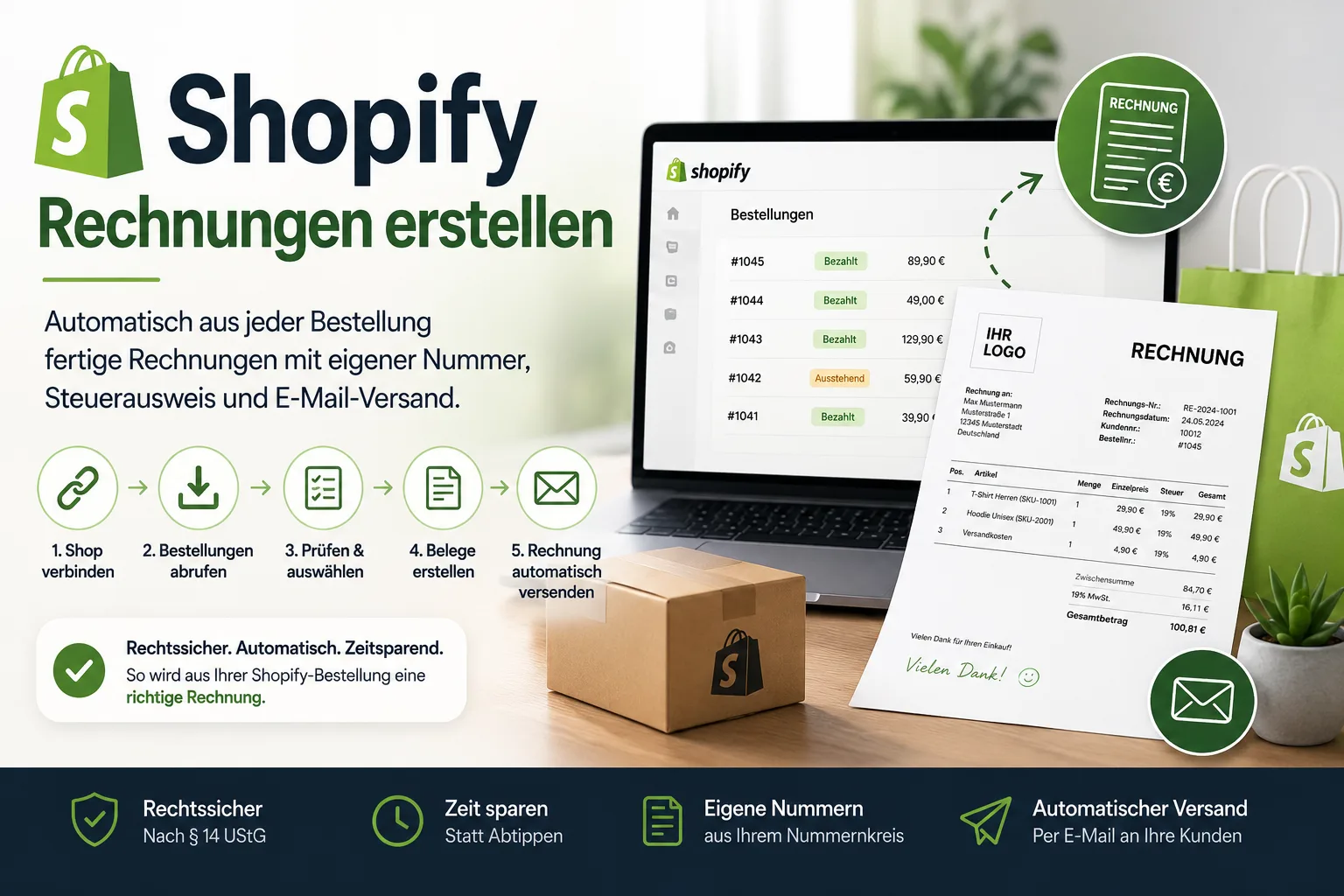
Creating invoices for Shopify
Shopify sends order confirmations – not invoices. How to get from a Shopify order to a finished invoice in five steps, with your own number, correct tax details and automatic sending.
 E-Commerce & Marketplaces
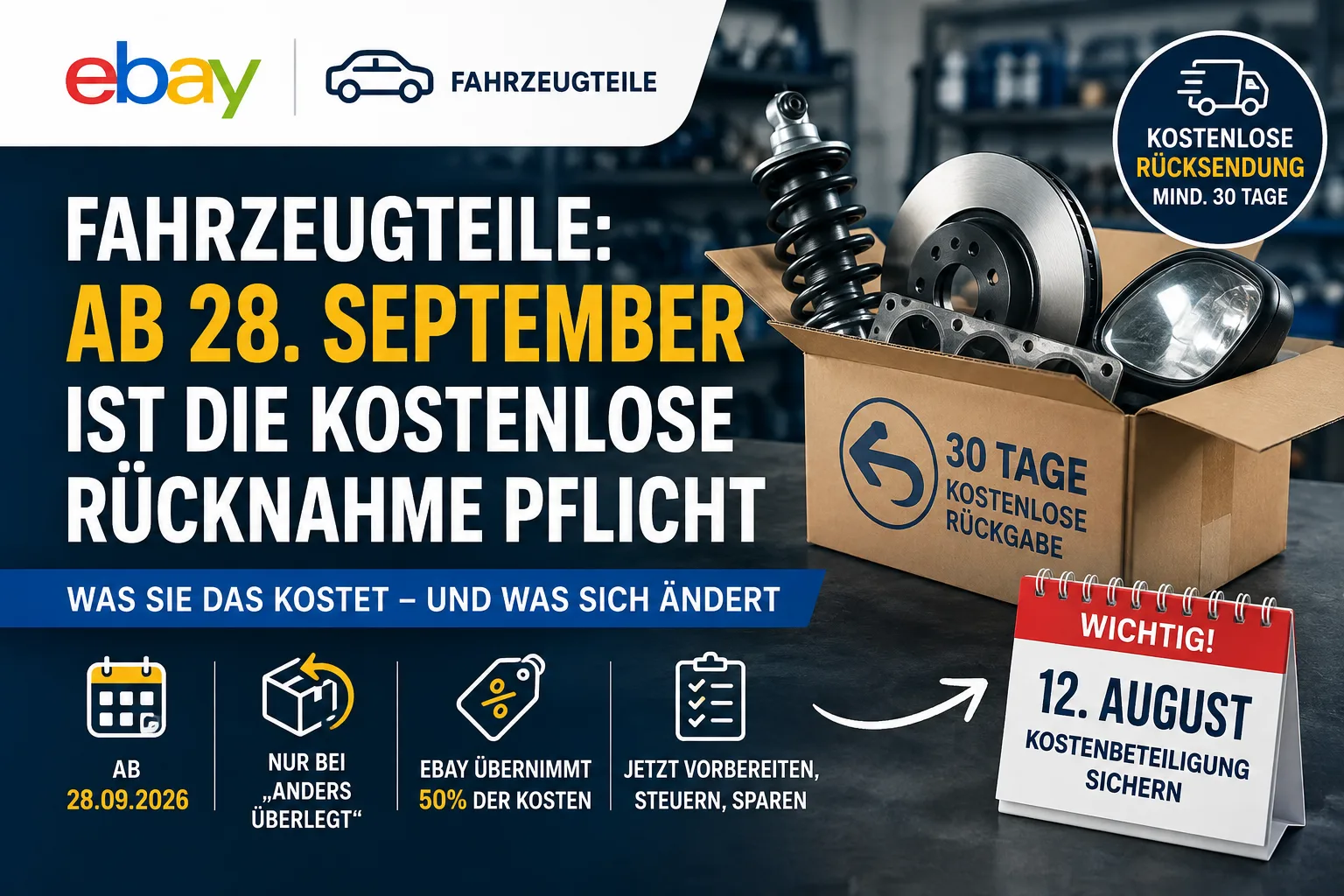
eBay vehicle parts: free returns mandatory since 28 September – what it costs you
New parts over 10 euros at a fixed price: since 28 September you have to take them back free of charge for 30 days and adjust your withdrawal policy. Which returns are not covered, what the rule costs and what to check now.