Google Local Services Ads 2026: How Tradespeople Win New Jobs
If you run a trade business or local service company and want to win new customers through Google in 2026, there is one ad format you can hardly avoid: Google Local Services Ads (in Germany branded as "Google Lokale Dienstleistungen"). Unlike classic Google Ads, you don't pay per click but only for actual leads — and your ad appears at the very top of Google search, often with a "Google verified" badge.
Table of Contents
- What are Google Local Services Ads?
- Which industries are eligible?
- The "Google verified" badge — what changed in 2025/26
- What does the format really cost?
- Five steps to your first ad
- Common mistakes — and how to avoid them
- Frequently Asked Questions
- Conclusion
- Sources
What are Google Local Services Ads?
Local Services Ads are a special ad format for businesses that operate locally — trades, cleaning services, moving companies, landscaping and similar. Your ad appears at the very top of the Google search results, above the regular text ads and the organic listings.
The key difference to regular Google Ads: you don't pay per click (Pay-per-Click) but per lead (Pay-per-Lead). According to Google, a lead is a phone call or message that a prospective customer sends directly through your ad — meaning people who actively chose your profile.
What does that mean for you? A curious visitor who clicks and bounces costs you nothing. Only when someone actually calls or writes does your budget go down.
Which industries are eligible?
In Germany, the format is currently limited to selected industries. Google lists the eligible categories in its official help. As of May 2026, these include:
- Electrical, plumbing (sanitary engineering), HVAC (heating, ventilation, air conditioning)
- Carpentry and joinery, flooring, siding, roofing
- Handyman and general contracting, home improvement, appliance repair
- Cleaning services, carpet cleaning, window cleaning
- Moving services, junk removal, pest control
- Landscaping, lawn care, tree services, snow & ice removal
- Home inspections, pool services, water damage restoration
You can find the full list on the Google help page. If your category is listed, the sign-up form lets you check whether ads are already being delivered in your ZIP code area.
What does that mean for you? Photographers, coaches, or online retailers don't fit this format and should look at classic search ads or social media advertising instead. For painters, electricians, plumbing firms and cleaning companies, it is worth a closer look.
The "Google verified" badge — what changed in 2025/26
Until October 2025, Google Local Services had two different trust badges ("Google Guaranteed" and "Google Screened"). Since 20 October 2025, Google has consolidated these: there is now only the "Google verified" badge. The earlier money-back guarantee from the Guaranteed program was discontinued at the same time.
To get the badge, you have to complete Google's onboarding. According to the official help, this includes:
- License or business registration (depending on your industry)
- Confirmation that you hold all required permits
- Reviews in a minimum number, depending on your category
- Completed billing setup and a defined budget
The badge increases the visibility of your profile and builds trust — particularly for emergency jobs where customers have to decide quickly who they let in the door.
Pre-badge ads. While onboarding is still running, you can already run ads in many categories — they appear below the fully verified providers. This option is not available for garage door services, locksmiths and the healthcare sector.
What does the format really cost?
Google does not publish flat-rate prices — cost per lead depends on industry, region and competition. You set a monthly budget that can be adjusted at any time. Google's budget tool gives you an estimate based on how many leads per week you want to receive.
A few notes for an honest calculation:
- Per lead, not per job. A lead doesn't automatically become a job. Your close rate (on the phone or via message) decides whether the format pays off.
- Leads can be disputed. Google allows you to report irrelevant leads — for example spam or calls from regions you don't serve. They are usually credited back.
- Response speed matters. If you regularly fail to reply to calls and messages, your ad rank suffers — meaning less visibility for the same money.
Example: A small electrical firm in the Münster region in Germany sets a monthly budget of €600. It receives on average 15 leads per month. Eight of them turn into jobs, five of those with an order volume above €1,000. Whether that pays off depends on margin and capacity — what matters is not the number of leads but how many you actually close.
Five steps to your first ad
- Check category and area. On the Google sign-up page, check whether your industry is active in Germany and whether your region is covered.
- Enter your business details. Company name, services, service area, opening hours. Google partly uses this data for your Google Business Profile too.
- Upload documents. Business registration, master craftsman certificate where required, insurance — depending on your industry. The screening is free but typically takes several working days.
- Set your budget. Start conservatively and adjust after four to six weeks once you see the actual lead volume.
- Reply to leads quickly. Same business day at minimum, ideally within one to two hours — response rate feeds into ad rank.
Tip: in parallel, keep your Google Business Profile for tradespeople up to date. Both formats complement each other — one is free and gives you organic visibility, the other is paid and gives guaranteed top placement.
Common mistakes — and how to avoid them
- Service area too large. If you cover an entire federal state, you'll get many leads from areas you don't actually want to drive to. Start small and expand once the funnel is clean.
- Ignoring leads. An unanswered lead costs you twice — the lost job and, long-term, your ranking bonus.
- Neglecting reviews. Reviews are a factor in ad rank and a key trust signal. See also our article on collecting customer reviews compliantly.
- Outdated hourly rate. If you receive more leads, your prices must be sustainable. Refreshing the hourly rate for tradespeople almost always pays off when scaling.
Frequently Asked Questions
Are Google Local Services Ads worth it for sole traders?
Usually yes, if your category is listed and you operate in a region with sufficient demand. The key is being able to respond quickly — otherwise you burn budget.
What's the difference to a Google Business Profile?
The Google Business Profile is free and represents your business in Google Search and on Google Maps. Local Services Ads are paid ads, shown above the profile and above the text ads. They complement each other.
How long does verification take?
It depends on your industry and how complete your documents are. Google doesn't publish fixed processing times, but in practice you should expect several working days, in individual cases longer.
Can I dispute irrelevant leads?
Yes. Google allows you to report invalid leads — such as spam, foreign calls or requests outside your service area. Justified disputes are usually credited back.
Do I need a master craftsman certificate?
In Germany, the German Trade and Crafts Code applies. If your trade requires a license, you must upload the relevant certificates to Google as well. For non-regulated trades, a business registration is usually sufficient.
Conclusion
Google Local Services Ads is one of the most direct ad formats in 2026 that trades and local service providers should know — precisely because you only pay for actual leads and your profile is visible at the top of the Google results page. Anyone who answers quickly, keeps reviews up to date and has a realistically calculated hourly rate can grow the format into a steady source of jobs. If you try it, keep workload and cash flow in mind — clean quoting and invoicing software helps you not lose the additional leads in your daily routine.
Sources
- Google Local Services overview — Germany (Google Local Services Help) — Official overview: how it works, requirements, available industries in Germany.
- Google Local Services — More jobs for your local business (business.google.com) — Official product page with budget tool, industry list and sign-up flow.
- About the "Google verified" badge (Local Services Help) — Official explanation of the unified trust badge since October 2025.
- Google Guaranteed (Local Services Help) — Background on the retirement of the Guaranteed program and transition to the "Google verified" badge.
- Google Local Services policies (Ads policy help) — Official ad policies and requirements for providers.
Handle invoices more easily
Easy Invoice combines quotes, invoices and customer management in the cloud.
Try Easy InvoiceRead next
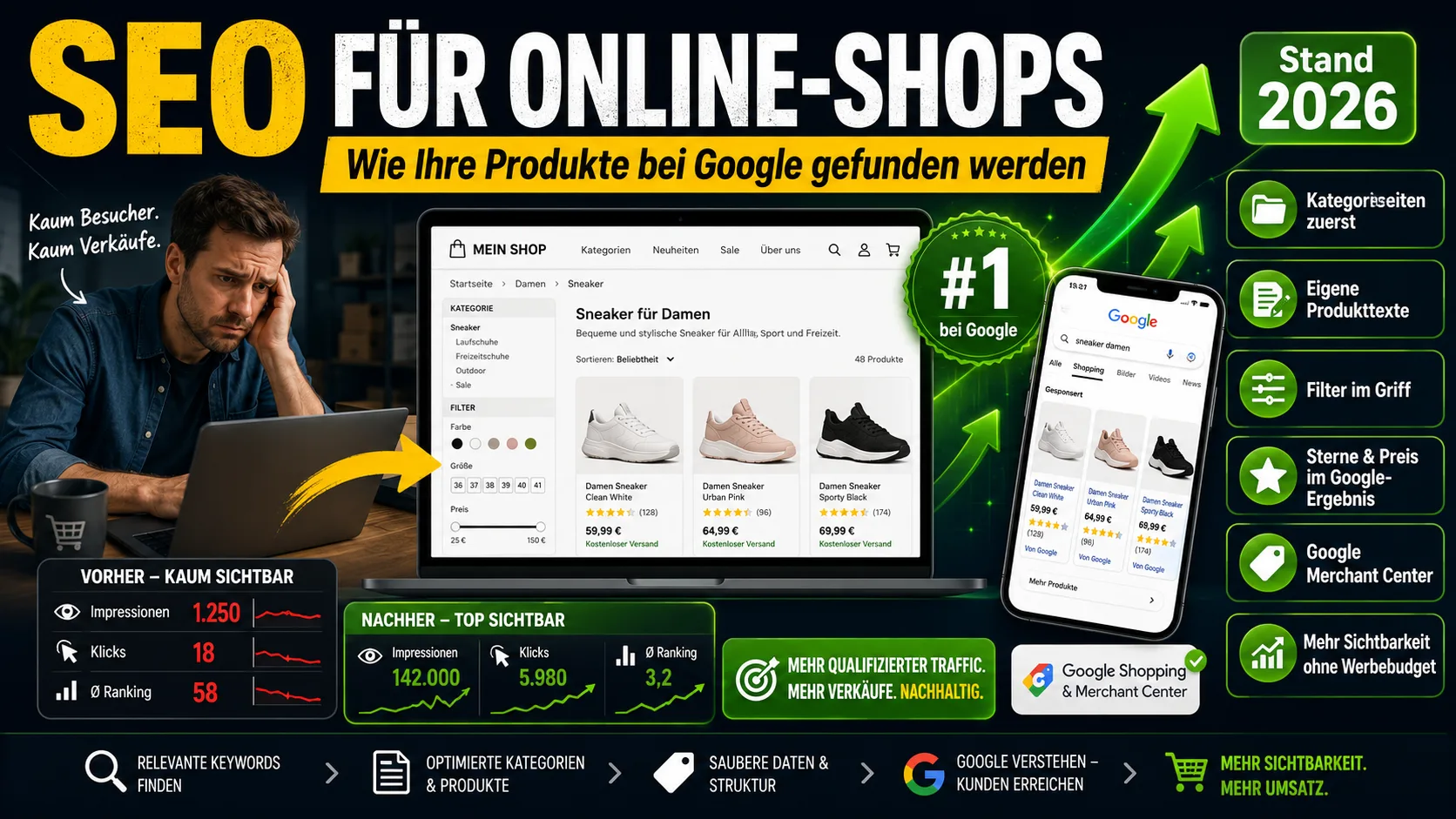 Marketing & SEO
SEO for Online Shops: How Your Products Get Found on Google (2026)
Shop SEO works differently from ordinary website SEO. What really counts on category and product pages – without the technical jargon.
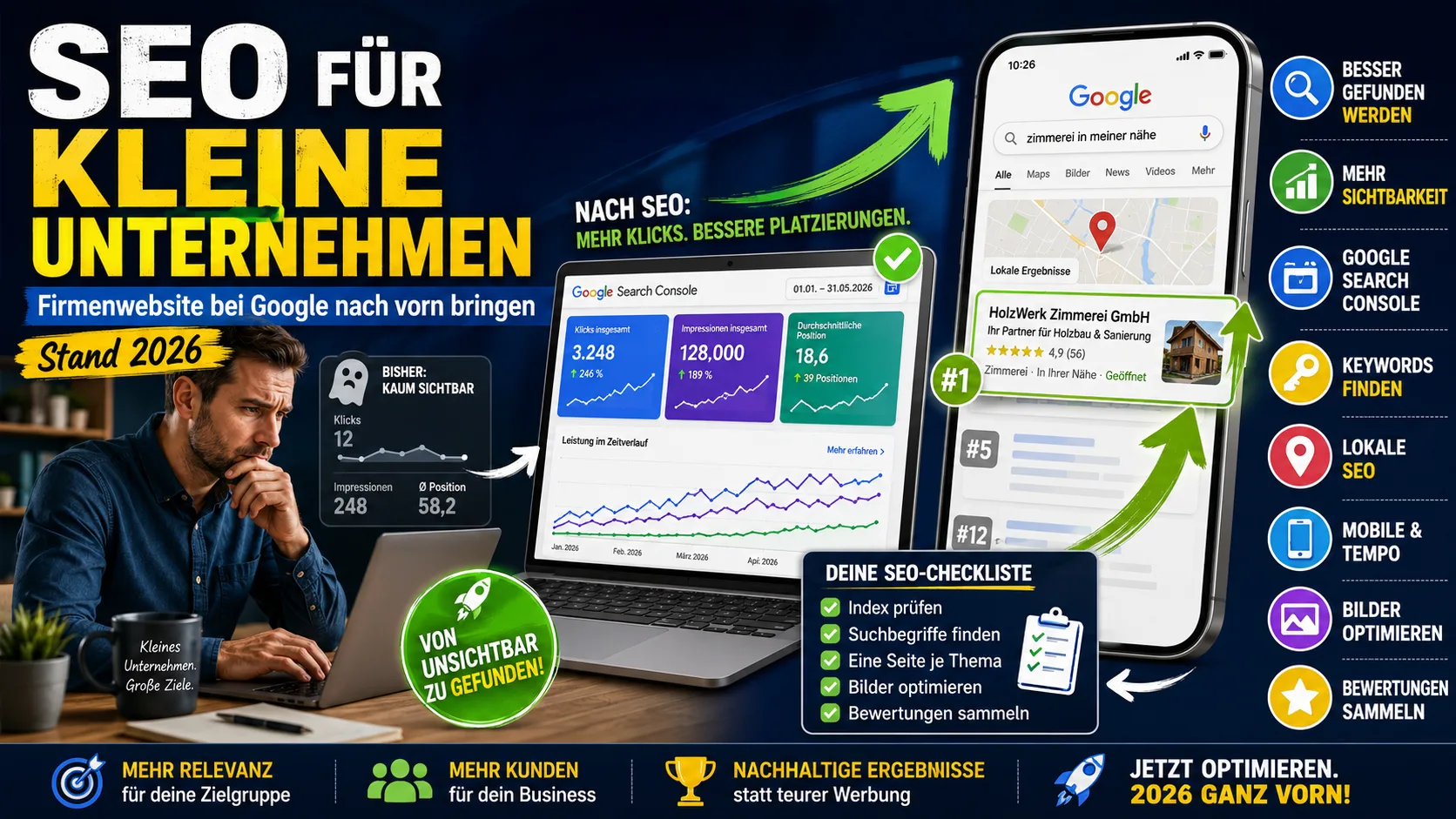 Marketing & SEO
SEO for small businesses: getting your company website to the top of Google (as of 2026)
Starting from scratch: are you even on Google? Why you are not being found, what you can change yourself in three weeks – and what you can safely skip.
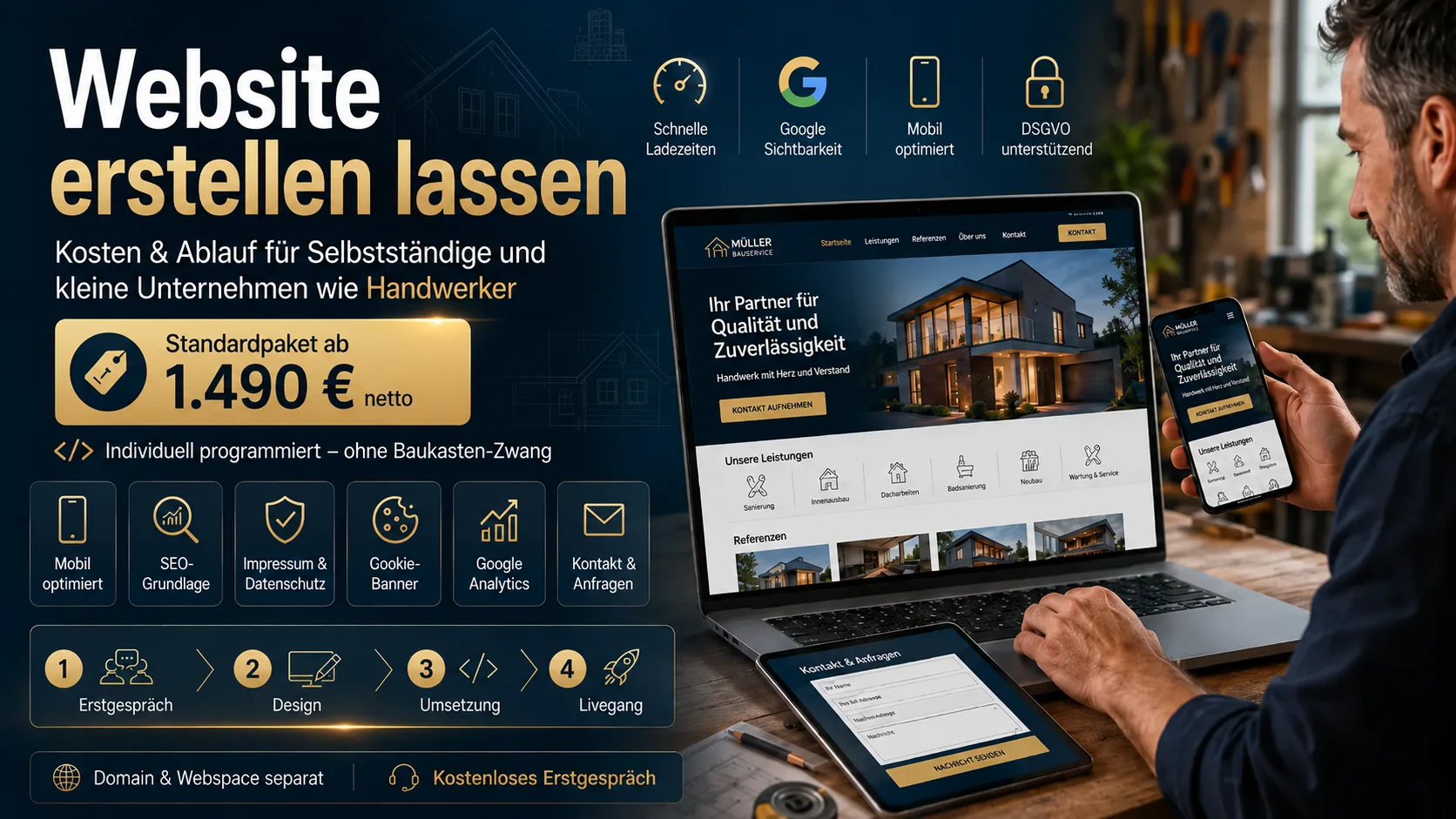 Marketing & SEO
Getting a Website Built: Costs & Process for Freelancers and Small Businesses Like Tradespeople
What does it cost to have a website built? Real prices, what belongs on a 2026 site, and how the process works – for freelancers and small businesses like tradespeople.