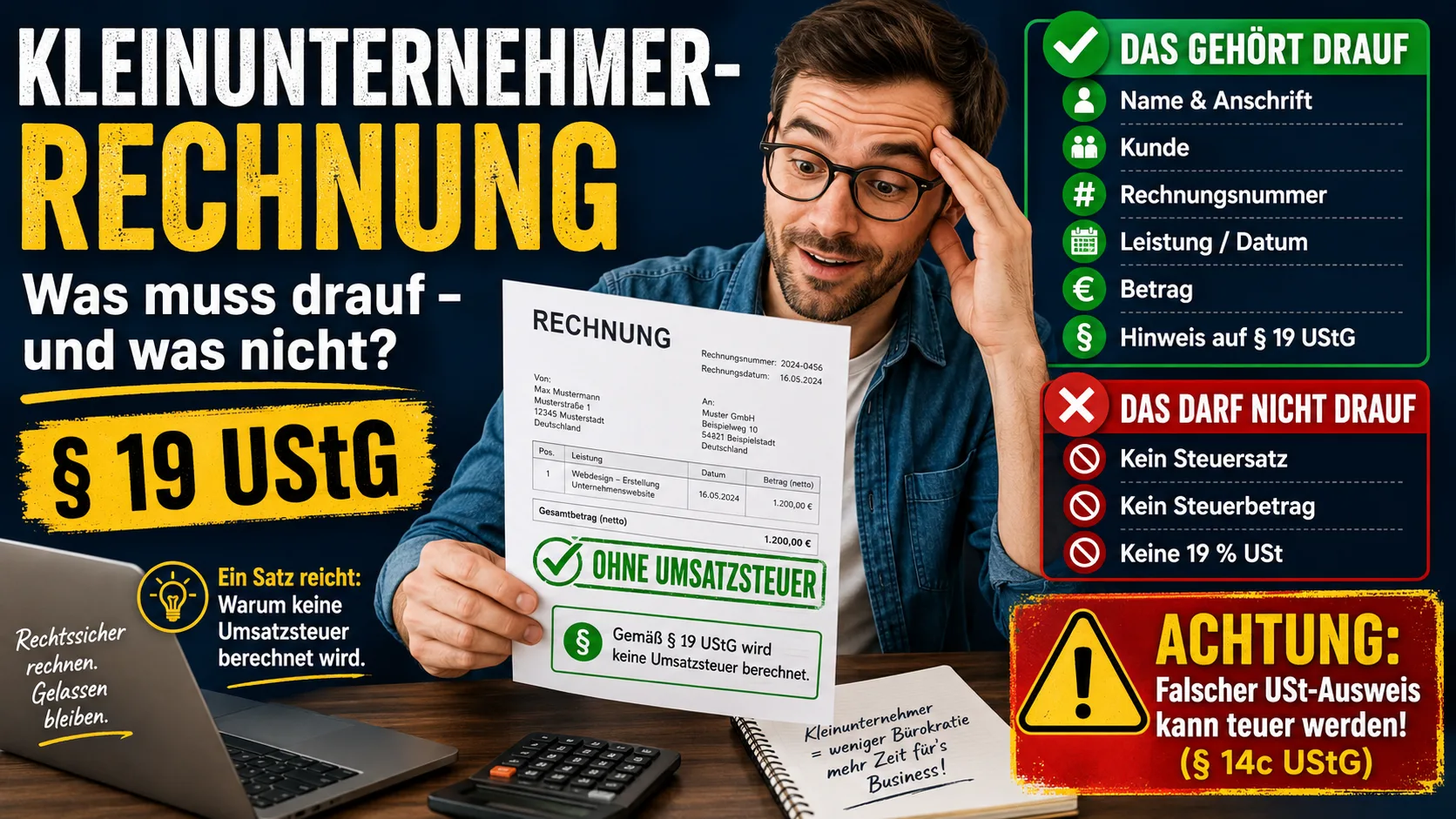
As a small business under § 19 UStG (section 19 of the German VAT Act), you issue invoices without VAT. It sounds simpler than for everyone else – and it is. Two things still often go wrong: the mandatory note is missing, or a tax amount ends up on the invoice after all. Both can be avoided in two minutes.
What Is Missing on the Invoice – and What Is Not
Without VAT means: your invoice shows no tax rate and no tax amount. The invoice amount is at the same time the final amount – no line saying "plus 19 % VAT".
All the other mandatory details, however, remain in place just as on any invoice:
- your full name and address,
- the name and address of the customer,
- your tax number (or VAT identification number, if you have one),
- the date of issue and a sequential invoice number,
- the quantity and type of the service as well as the time of supply,
- the invoice amount.
Only for amounts up to 250 euros gross may you keep it shorter – then the rules of the small-amount invoice apply.
The Mandatory Note on § 19 UStG
Because the VAT is missing, you must state the reason for it. A customer – and the tax office – must be able to see that no tax is deliberately being charged here and that this is not an error. No exact wording is prescribed; common and accepted examples are:
"In accordance with § 19 UStG, no VAT is charged."
"In accordance with § 19 UStG, the amount stated does not include VAT."
"No VAT is shown, as a small business under § 19 UStG."
One sentence is enough, usually at the end of the invoice below the amount line.
The Expensive Trap: Accidentally Stating VAT
The mistake that costs money: you reuse an old template or use a program with a preset tax rate – and suddenly "19 % VAT: 38.00 €" appears on the invoice. Anyone who, as a small business, states VAT even though they are not entitled to do so still owes that amount to the tax office (§ 14c UStG). You would have to pay the tax over without having budgeted for it.
This can be corrected by issuing a correction to the invoice – but the simplest route is not to let it happen in the first place. Make sure your template or software is set to "small business / no VAT". In Easy Invoice on office1.cloud you set the status once – after that the note appears automatically and no tax rate is shown. If instead you refund a customer later on, that is not an error but a reduction in consideration – see creating a credit note.
May Small Businesses Send a PDF Invoice?
For the receipt of e-invoices, the following applies: even as a small business you should be able to accept and read structured invoices. When it comes to issuing them, there are simplifications and transitional rules that have changed several times in recent years. Because things are in motion here, it is worth checking the current state of play – details in our article E-invoicing obligation for small businesses.
A Word on the Effect on the Customer
Some founders worry that an invoice without VAT looks "unprofessional" or reveals their small turnover. The opposite is true: the § 19 note is a perfectly normal, familiar sentence. Business customers know it – and for private customers your service is simply 19 percent cheaper than with a VAT-liable provider. Whether the status is even worthwhile for you depends above all on your customers; we worked through that in Small-business scheme – yes or no?.
_This article gives a general overview and is no substitute for tax advice. What matters is your specific individual case; when in doubt, your tax adviser can help._
Handle invoices more easily
Easy Invoice combines quotes, invoices and customer management in the cloud.
Try Easy InvoiceRead next
 Invoicing & Accounting
Instalment agreement with customers: template and rules
Your customer asks whether they can pay the invoice in three instalments. Before you agree, two things matter: the tax office will not wait, and your favour legally becomes a loan.
 Invoicing & Accounting
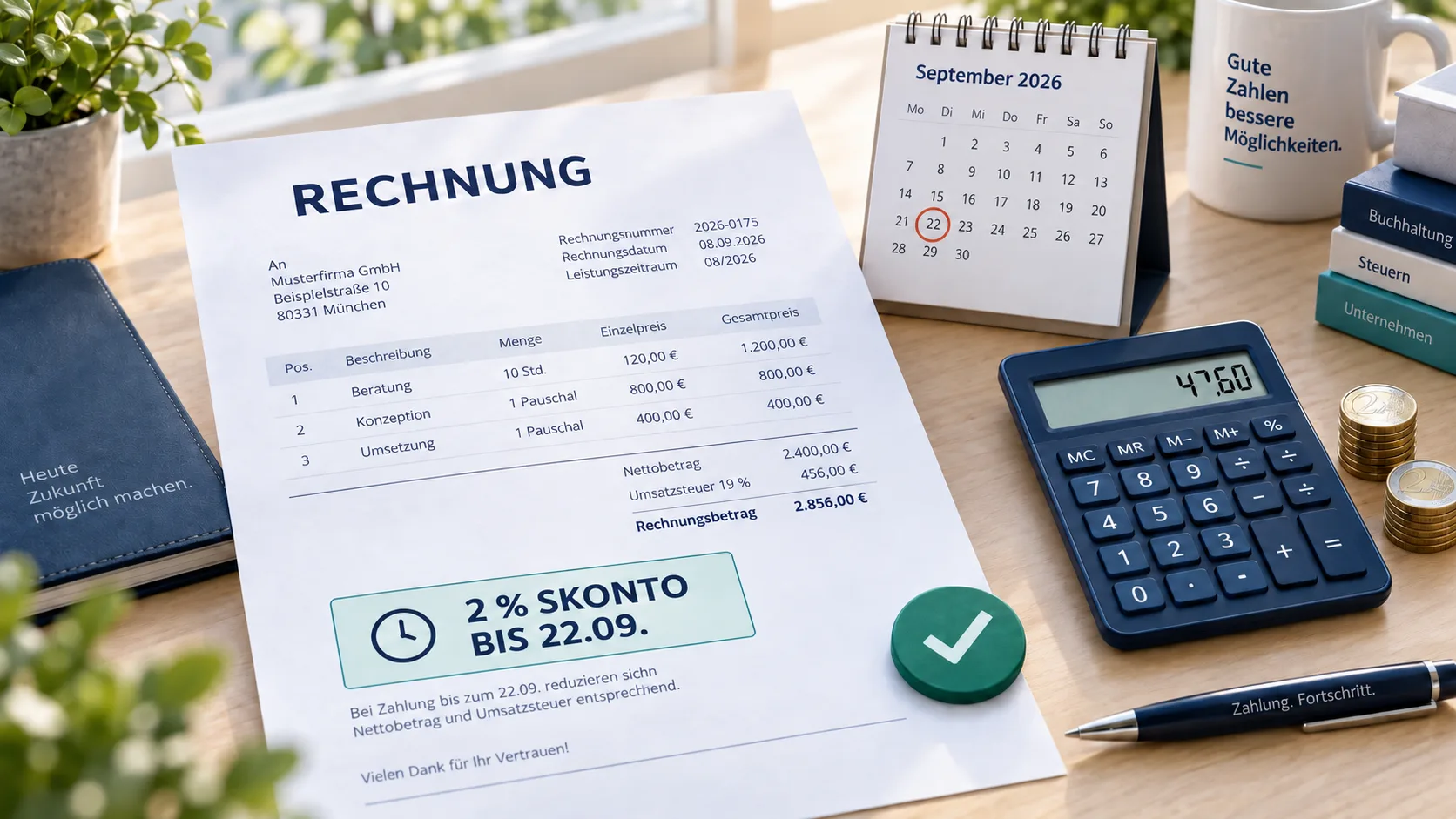
Cash Discount on an Invoice: Wording, Deadline and VAT
A client deducts a cash discount even though they paid far too late – and looking at your invoice, you realise your wording never settled the point.
 Invoicing & Accounting
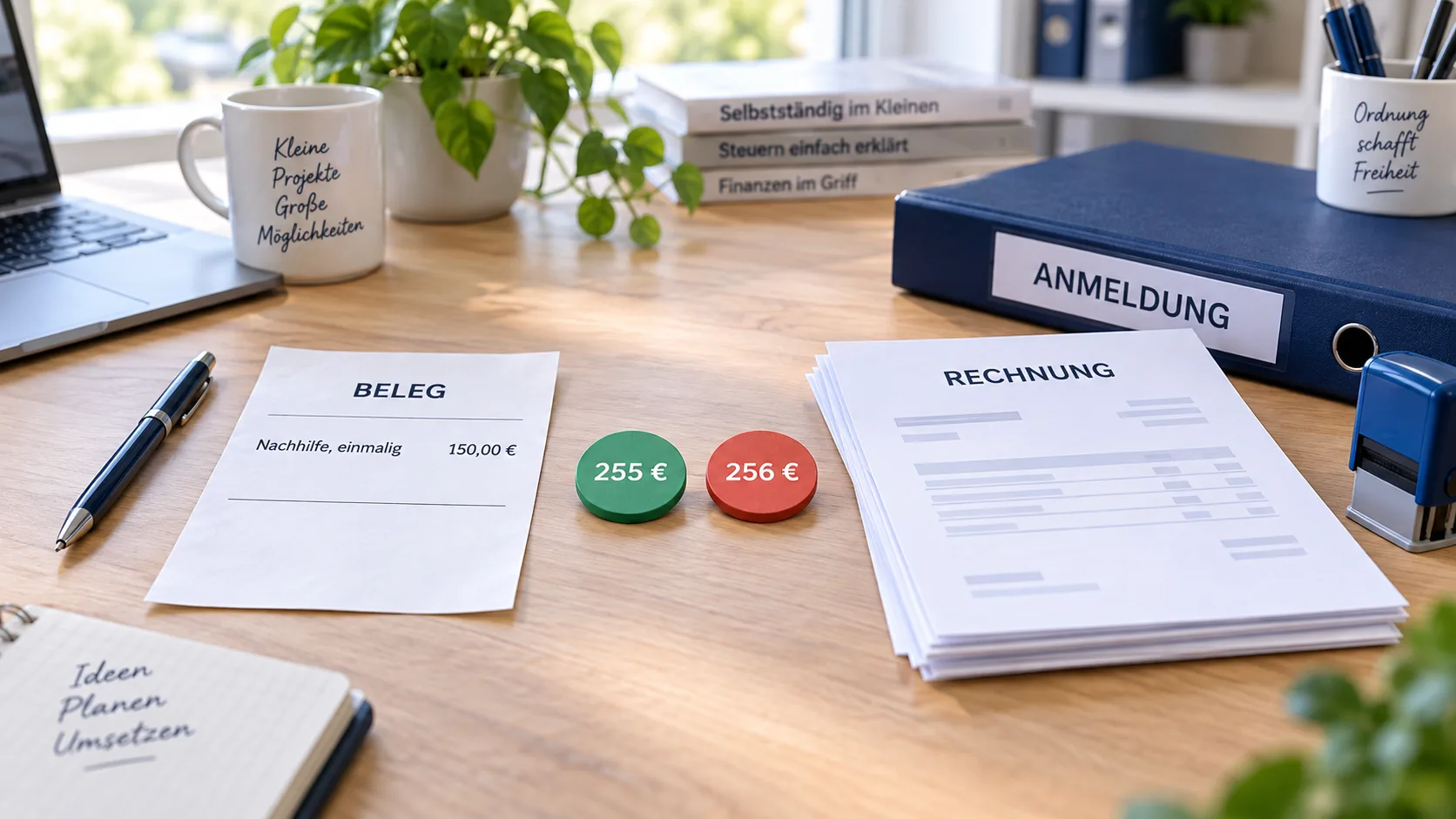
Invoicing Without a Trade License in Germany: Allowed, With a Limit
A client wants an invoice, but you haven't registered a trade. You may still write one – the real question is when a favor turns into an obligation.